ELECTRICAL TRANSMISSION SYSTEM
Nasumil Enterprise and Technology limited is ahead with its overhead power-line materials, waiting for You! We are your destination for all transmission and sub-transmission electrical equipment and its accessories or components which generally consists of:
- Insulated wires or cables for transmission of power.
- Transformers for converting from one voltage level to another.
- Protective devices, such as circuit breakers, relays, communication and control systems.
- Physical structures for containing the foregoing, such as transmission towers and substations.
Knowledge is the one of the best gifts to human being as Nasumil Enterprise and Technology limited considers all students or learners in this field of technology by giving basic and useful knowledge or material to unlock their understanding beyond their limited ideas.
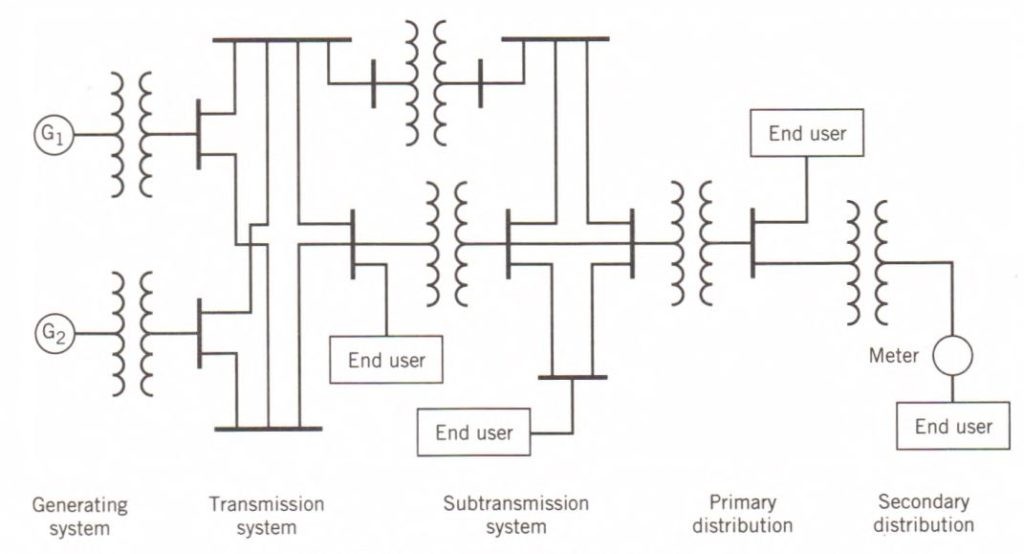
The transmission and sub-transmission systems are meshed networks; that is, there is more than one path from one point to another. This multiple-path structure increases the reliability of the transmission system. The transmission network is a high-voltage network designed to carry power over long distances from generators to load points. The sub-transmission network is a low-voltage network whose purpose is to transport power over shorter distances from bulk power substations to distribution substations. The transmission system, which is usually 132 to 765 kilovolts (kV), and the sub-transmission system, which is usually 34 to 132 kV.
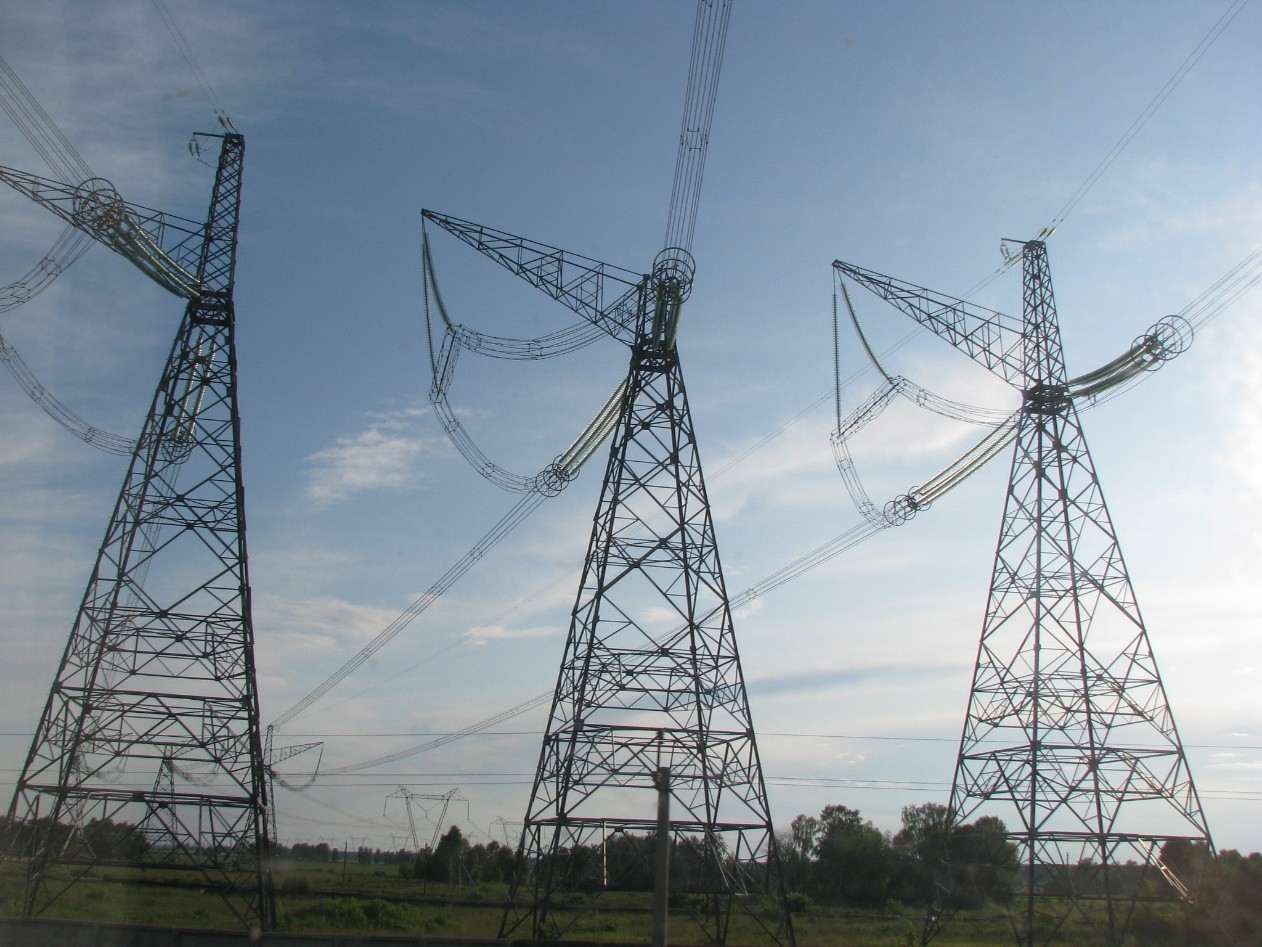
Nasumil Enterprise and Technology limited is offering transmission line accessory, the importance of the transmission line is to travel Power from a power plant to faraway places where people use it. It’s made of special wires called ACSR, which stands for aluminum conductor steel reinforced. The steel makes the wires strong. Most of the wires are aluminum because it’s a good conductor and weighs less than copper. This helps electricity travel efficiently and safely. We will bring all equipment as follows per your demand location:
- Aluminum conductor
- Copper conductor
- Suspension type insulator
- Shackle type insulator
- Pin type insulator
- Disk insulator
- Strain type insulator
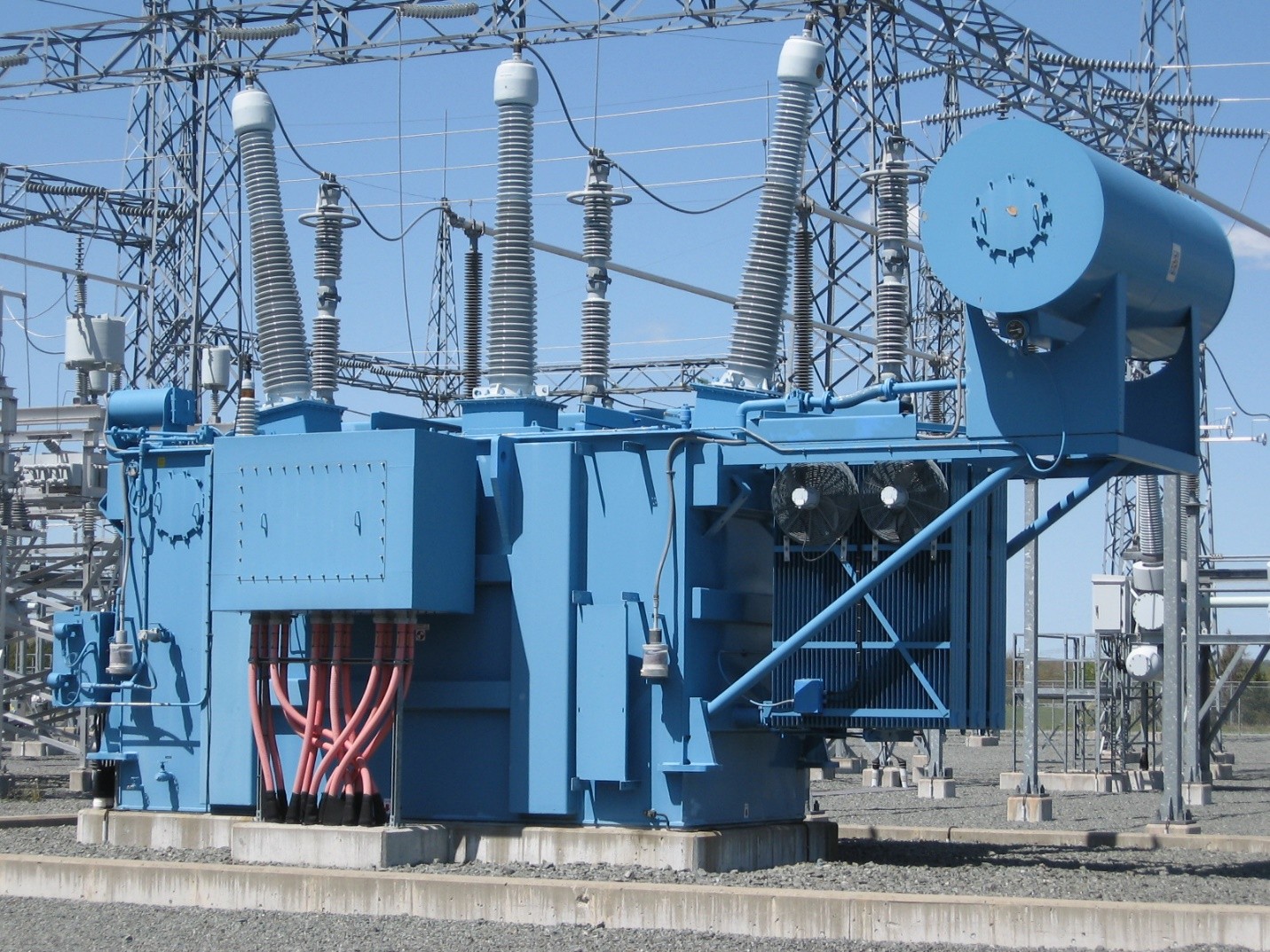
Nasumil Enterprise and Technology limited is a global dealer in transformers, offering liquid-filled and dry-type transformers, as well as spear parts for complete life-cycle support, including replacement parts and components. It plays a great roll for stepping up the voltage generated by the plant's generators to a higher level suitable for long-distance transmission.
- Bushing
- Heat Exchange
- On load Tap changer
- Offload Tap changer
- Transformer Oil
- Pressure Relief
- Breather
ADVANCES IN TRANSMISSION AND DISTRIBUTION
Here is an in-depth look at power transmission and distribution systems and the components that help optimize them, such as converters, machine learning and advanced analytics, load management, and distribution automation.
In a power grid system, transmission and distribution are crucial to ensuring that electricity is delivered efficiently and reliably. There have been notable improvements in power transmission and distribution technology over the years. Nasumil Enterprise and Technology limited dive deeper into these innovations, including high-voltage direct current converters (HVDC), advanced analytics and machine learning algorithms, load management technology, and distribution automation.
High-voltage Direct Current Converters
HVDC converters are electrical devices that convert alternating current (AC) to direct current (DC) and vice versa, allowing for the interconnection and long-distance transmission of power into the grid system in different frequencies. The control algorithm and advances in digital technology in HVDC have resulted in a notable improvement in the reliability, efficiency, and flexibility of the system.
Minimal losses in power transmission over long distances are one of the primary advantages of HVDC. This is made possible since the transmission of DC power can be done at higher voltages than AC power, thereby minimizing losses caused by increased resistance in the grid. The determination of the transfer capacity of power in the HVDC system is done using the maximum current and voltage that can be transmitted through the system. The power transfer capacity can be calculated using the following formula;
P = V×I
where P is the power in watts, V is the voltage in
volts, and I is the current in amperes.
Example Calculation
An HVDC system can transmit a maximum voltage of 250 kV and a maximum current of 1000 A. Evaluate the maximum power transfer capacity in the system.
P = V×I
P = 250,000 volts×1000 amperes
P = 250,000,000 watts
P = 250 MW
The maximum power transfer function in the HVDC is therefore equal to 250 MW.
Another advantage of the technology in HVDC is the ability to integrate renewable energy sources into the grid system. Wind and solar can pose a challenge to their stability in power output. This is where HVDC come in to counteract this issue by smoothing out the variability of their output.
The performance and operation cost of the power transmitted can be affected by the efficiency of the HVDC converter. Losses in converters can be divided into AC losses resulting from filter circuit losses and transformer and DC losses resulting from the resistance of the power transmission line. To calculate the total converter losses, we sum up the AC and DC losses. Losses in AC can be evaluated using the following formula;
AC losses = Transformer losses + Filter circuit
losses
For DC losses the formula below is used;
DC Losses = I2×R
Where R is the resistance in Ohms of the transmission
line, and I is the current in amperes flowing through
the line.
Example calculation
A DC transmission line has a resistance of 0.01 ohms. If the current flowing through it is 1000A, calculate the DC losses in the system.
Solution
DC Losses = 10002 × 0.01=10000 watts or 10 kW
If the transformer losses and the filter circuit losses
in the system are 5000 watts and 3000 watts
respectively, then the AC losses can be evaluated as
follows:
AC losses = 5000+3000=8000 watts or 8 kW
The total converter loss can therefore be calculated as
follows;
Total converter losses = 8 kW+10 kW=18 kW
By minimizing the losses, the efficiency of HVDC
converters can be optimized to improve performance and
lower operating costs.
Advanced Analytics and Machine Learning
Advanced analytics and machine learning in the transmission and distribution of power in grid systems are becoming increasingly notable. The extraction of insights and data analysis using mathematical and statistical models is called advanced analytics. The extraction of insights and data analysis using mathematical and statistical models is called advanced analytics. On the other hand, machine learning involves using a training algorithm to learn from data to make decisions or predictions.
In predictive maintenance, advanced analytics and machine learning are used to analyze sensor data to predict the probable failure time. This allows the maintenance crew to schedule maintenance to prevent unplanned downtime and improve grid reliability.
Load forecasting is also an area in which advanced analytics and machine learning are used to predict the amount of electricity needed at different times of the year. This allows for the power plants to meet consumer demands. Accurate load forecasting helps the plant minimize using expensive peak plants.
Load Management Technologies
Load management technology uses algorithms and mathematical models to control the electrical demand in the grid system. An example is the price elasticity model demand program to predict how customers will respond to changes in the prices of electricity.
Distribution Automation
Distributed automation (DA) utilizes automated systems and advanced technology in electrical distribution networks to improve reliability and efficiency. These technologies include fault detection and isolation systems, advanced metering infrastructure, and distributed energy management systems. These DA technologies allow for real-time control and monitoring of distribution networks for faster outage detection and restoration.
Takeaways of Advancing Transmission and Distribution
There is a notable evolution in the field of power transmission and distribution with huge focuses on technologies like HVDC converters, distribution automation, load management technology, advanced analytics, and machine learning. HVDC converters allow for long-distance transmission of power while minimizing losses and integrating renewable energy into the grid. Load management, on the other hand, regulates electrical distribution according to energy demand, while distribution automation simplifies fault detection and isolation. These technologies will play a significant role in designing a reliable and sustainable power grid system.